Introduction
Modern businesses thrive because of different techniques. In the old days, businesses had to manufacture the products, which was time-consuming. However, things have changed as brands generally partner with manufacturers. That’s where understanding the differences between white label and private label becomes essential. Interestingly, people consider both white and private labels the same.
The reason is that these two methods involve the use of third-party manufacturers to make different products. However, reality is not that, as white and private labeling have many differences. Understanding the basics of white- and private-labeling is crucial if you’re getting into any business. In this article, I will discuss the distinction between white labels and private labels. So, let’s get started!
Quick Overview of White Label & Private Label
Before discussing the comparison, let’s first discuss the basics of both white and private labels.
White-label and private-label are two product sourcing models. Both of these strategies involve outsourcing products from third-party manufacturers. However, white-label products are less customized, and many brands can sell the same product under their own branding. Private label products are more customized, unique, and one brand can sell them officially.
As I said above, modern brands don’t manufacture products. Instead, they focus more on marketing to grab more customers. For products, they partner with third-party manufacturers to source them. This way, they can focus on one thing, which is to grow the business. There are two ways or strategies to outsource the products.
White-label products are pre-made by manufacturers. Different brands sell the same product (same quality) with their own branding. This means there are more competitors when it comes to selling white-label products. Customers can buy them from different stores, which also affects the profit margin. In contrast, private label products are not pre-made; they are customized.
You’ll order the custom product including gummy from third-party manufacturers. The manufacturing process will be carried out according to your preferences. This will produce a unique product with custom specifications. Although other manufacturers will make this product, only you will sell it. No other brand will be able to sell this product under their branding.
Private labels give you more control and make you different from others. Since your product is custom, you can adjust the price as per your preferences. Since no other brand offers the same product, customers will come to you to buy it. However, private label products are more difficult to outsource than white label products. Manufacturers take more time to manufacture custom products.
Difference Between White Label and Private Label
The section above gives a basic overview of white and private label products. However, these two product outsourcing models have many distinctions. That’s why some brands prefer white labeling while others choose private labeling. In the section below, I will explore the differences between white label and private label.
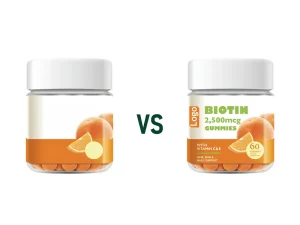
1- Product Customization & Brand Ownership
In white labeling, there is very little room for customization. Third-party manufacturers handle the manufacturing process. They provide ready-made products for sale. The brand simply puts its logo on the packaging and sells them. Simply put, brands cannot dictate the manufacturing process, ingredients, and so on. The brand’s control has very minimal effect on branding ownership.
On the other hand, private labels allow brands to be involved in the manufacturing process. Remember, third-party companies, such as a tablet manufacturer, also make private label products. However, the brand can dictate the manufacturing process, materials, formulation, and so on. This way, brands get the product that they actually want. This gives brands more control, improving ownership of their products.
2- Exclusivity & Number of Sellers
As I said above, white label products are made by one manufacturer. However, this product is sold by different brands. They simply add their logo and branding to the product and sell it. This means there is no exclusivity when you use the white labeling model. Additionally, more sellers are in the market, selling the same product under different brands. In contrast, private-label products offer greater exclusivity.
The manufacturer makes the product as per your instructions and guidelines. You get the product and sell it with your branding. No other seller can sell private label products. This means no other brand offers the same products. This reduces the competition and gives your business more uniqueness and exclusivity. So customers come to your shop to buy the product because no one else offers it.
3- Level of Competition & Time to Market
The level of competition is generally very high in the white labeling product outsourcing model. The reason is that different brands sell one product. However, manufacturers offer ready-made products when it comes to white labeling. So the time to market the product is very low. You can simply order the product and launch it quickly.
On the other hand, private labeling reduces the competition. Manufacturers make products by getting custom instructions and formulations. This custom product is sold only by you. No other brand offers this product, which reduces the competition. However, manufacturers typically take more time to make such custom products. As a result, time to market the product can be slower and more time-consuming.
4- Risk Level & Beginner-Friendliness
The risk level is low when you use a white-label product and an outsourcing model. Why? The reason is that the same product is already in the market. Different brands use it, and it has decent market acceptance. So, the failure rate is low when you choose already-tested products. Additionally, you don’t need to be highly professional when using white label products. In contrast, the risk level for private-label products is high.
The reason is that you make a custom product that is not present in the market. You make the product and test whether it works. If the product is not of the highest quality, it can fail, leading to investment loss. Additionally, you must be an expert, as you will handle the product development process. The manufacturer will follow your instructions, design, and materials for making the product. If you’re a beginner, you may end up making a low-quality product with poor guidelines.
5- Product Quality & Packaging Flexibility
Product quality is the most important factor in the success of any business. White label products are ready-made with fixed quality. Unfortunately, you cannot make modifications to the products as they are made with industry standards. All the products will have the same quality (either good or bad), unlike custom powder supplement options. When it comes to packaging, you can add your logo and branding to the products.
On the other hand, private labeling allows you to control product quality. The reason is that you’re part of the product development process and can adjust the quality. You can give instructions to the manufacturers about materials, etc., to get quality products. Additionally, there is more flexibility with the packaging. Not just the logo or branding, but you can control everything from the packaging point of view.
6- Scalability & Product differentiation
Scalability is easier with white-label products. The reason is that these products are easily available from manufacturers. Remember, these products are pre-made, and your inventory won’t get empty. However, these products are the same, and different brands sell them, so there are no differentiation factors. Customers will have multiple options to buy the same quality product.
On the other hand, scalability is slow when it comes to private labeling. The reason is that manufacturers will take more time to make products. Your inventory can get empty, especially if you’re getting more customers. However, this product will be unique, which will give you a differentiation factor. In the long run, your growth will be sustainable due to unique products. Customers will reach out to you when they need your product instead of going to other brands.
7- Brand Identity & Strength
Brand identity and strength are two essential factors that play a key role in a brand’s success. As said above, white label products are sold by different brands with the same quality. Customers get more options to buy from. You’ll have to reduce the prices to get an advantage over competitors. Customers focus on prices rather than the brand.
On the other hand, private labeling helps improve brand identity and strength. You get custom products from third-party manufacturers. This product is unique and is not available in other stores. This way, customers reach out to you to get that product. This improves your brand identity, and you can sell the product at higher prices rather than lowering them.
8- Profit Margins & Initial Investment Cost
The initial investment is very low with a white-label product outsourcing model. These white-label products are pre-made and readily available for purchase. Additionally, these products are tested as different brands already sell them. This way, the chances of that product failing are low. However, you’ll have to sell the white-label product cheaply due to more competition.
As you know, many brands sell the same product under their own logos. So competing with them won’t be easy, and you’ll have to reduce prices to get customers’ attention. This reduces the profit margin. On the other hand, the private label product outsourcing model is more costly. You’ll have to invest in product development and ensure you get the right product.
After that, testing of that product will be another hassle. In case the product fails, all your investment will be lost. However, if the product does well, the profit margin on this business model is very high. As you know, private-label products will be sold only by you. There is literally no competition, which is a significant advantage. You’ll be able to sell products at higher prices, which increases your profit margins.
Conclusion: Which is better, White Label or Private Label?
The choice between white and private labels is a matter of individual preference. Many businesses, especially new ones, prefer white-label due to their low initial investment. However, private labeling is also a good option for well-established brands. Still want my opinion?
I recommend private label products if you want sustainable growth in your business. Although other manufacturers make these products, you control the manufacturing process. They make custom products as per your instructions, ingredients, materials, and so on. These products require higher upfront investment, but they also yield more profit.
Are you new to the business and just getting started? If so, choosing white label makes sense. These products are already tested, so their chances of failure are low. Additionally, you can start the business with low upfront investment. Once you get settled, going towards private labeling is the best option. Last but not least, understand business requirements before choosing a product sourcing model.