
Introduction
In the medicines and supplements industry, softgels have become very prevalent. They are found in vitamins, fish oil, and cold medicines. They are small, smooth capsules containing liquid in a soft shell. They are easy to eat and not harsh on the stomach, which is why many love them.
During the period of 2022 to 2024, the worldwide softgel market was estimated at USD 7.67 to 8.5 billion. Experts expect steady growth at about 6.9 percent each year until 2030. Such an upsurge indicates the popularity of this dose form among individuals.
This article explains softgel capsules, their variations, their advantages and limitations, and their production process.
What Are Softgel Capsules?
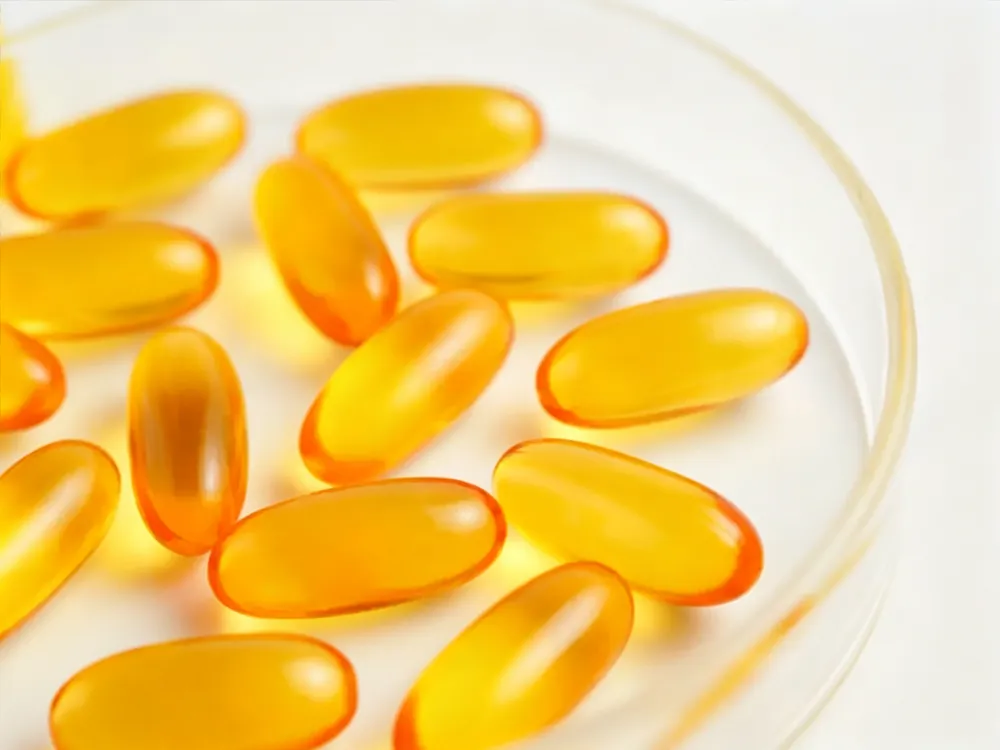
A softgel capsule is a smooth, closed pill that contains a semi-solid or liquid. The exterior is soft and elastic. This shell has gelatin, water, and a plasticizer such as glycerin. Other companies replace gelatin with plant-based materials, such as starch or carrageenan. This assists vegetarian or vegan people.
Softgels contain liquid containing vitamins, oils, or medicine. The shell protects it against air and light. They are dissolved in the stomach, and the liquid is consumed into the body. This helps the body utilize the ingredient.
Depending on volume, sizes vary. A unit called a minim measures this volume. 1 ml is approximately 61.1 microliters. They come in round, oval, or oblong shapes.
Types of Softgel Capsules
Depending on their use, softgels can come in various forms. Each type has its purpose.
The most common are standard oral soft gels. They are swallowed down with water. They release substances in the stomach to produce systemic effects.
The other type is chewable softgels. People chew them to extract the liquid. It is an appropriate form among children and older people.
There is a small tab on twist-off softgels. The capsule is twisted and opened by the users. They will then add the liquid inside it to food or a beverage.
Softgels can be taken as suppositories or pessaries. These go into the rectum or vagina. Doctors use them to treat the area where the patient is unable to swallow.
They have special designs as well. Enteric-coated softgels are made in a way to pass through stomach acid and be absorbed in the small intestine. This makes delicate ingredients safeguarded.
There can be two ingredients in the double-layered softgels. The layers merge once they are ingested. This design can be used as a combination treatment.
Target-released softgels are designed to deliver their constituents to specific body parts. It is a healthy mode of treatment for some diseases.
How Softgel Capsules Are Manufactured
Manufacturers use a method called rotary die encapsulation. This is a process that simultaneously shapes and fills softgels.
The machine forms two strips of gelatin. Then it fills the liquid in between. The capsule is formed, and the machine seals the edges. This procedure ensures that every softgel capsule contains the same dose. It also forms the same size and shape.
This process was first thought of in 1933. The rotary die method was developed by the scientist R.P. Scherrer. Workers dry them after formation under controlled conditions. Humidity and temperature are important as they can interact with the capsule material.
The production has to be very controlled. The shell and the liquid should be stable. Otherwise, the capsule’s quality could be compromised.
Advantages of Softgel Capsules
There are several advantages to softgel capsules. It is these benefits that make them so common in medicine and supplements.
- They improve bioavailability. Liquid form helps the body absorb ingredients faster. This is significant for less soluble compounds.
- They can be used to maintain delicate ingredients. The closed shell is impervious to light, air, and water. This protection extends the product’s lifespan.
- They can be swallowed easily. They are smooth, a factor that is good for individuals with tablet problems.
- They conceal bad taste and smell. The shell repels distasteful flavors to the mouth.
- They are precise in dosages given. Every capsule is predetermined with the quantity of the ingredient.
- They are effective with oils and fat-soluble nutrients. This is commonly used in the form of fish oil and vitamin E.
Disadvantages of Softgels
There are also some disadvantages of softgel capsules. These problems impact cost, storage, and production.
- They are more expensive than tablets. The production process requires specialized machinery and controls.
- They are responsive to heat and humidity. The capsule can be destroyed by high temperature or moisture.
- They tend to rely on third-party manufacturers. Most firms outsource production, which limits control.
- They employ gelatin made from animals. This inhibits certain eating habits.
- They offer some options for modified releases. Tablets are simpler to control with the release.
These factors are significant in determining the dosage form.
Key Benefits of Choosing Softgels for Your Supplement Line
Softgels are good for many types of supplements. They work well when ingredients need to be in liquid form. They help the body better absorb nutrients, such as omega-3 fatty acids. This helps the body use each dose more effectively.
They appear clean, are easy to use, and are available in various colors and shapes, making them great for branding. They also minimize dosing errors, as a predetermined amount is in each capsule. They are favored by many as they are easy to swallow, unlike large pills. Special double-layer designs also enable them to carry more than a single ingredient.
These advantages make them a good choice in most supplement lines.
Why Partner with a Professional Softgel Manufacturer?
Their manufacturing needs expertise and accuracy. An experienced manufacturer is a professional who comes with experience and equipment. They determine temperatures, humidity, and the quality of materials used in production.
They also manage formulation. Some ingredients react with gelatin, so experts adjust the formula. Professional teams test each soft capsule for quality. They check size, dose, and stability.
They also handle large-scale production. This helps companies meet demand without delays. Working with experts reduces risk. It also improves product quality and safety.
Conclusion
Softgels are a manageable and effective way to distribute drugs and vitamins. They have liquid in a flexible shell to enhance absorption and preserve ingredients. They are different in shape, size, and type to accommodate the delivery process and treatment requirements.
They offer benefits such as easy swallowing, precise dosing, and stability. They also have drawbacks, such as higher cost and heat sensitivity. Their global demand is growing, and they are used in healthcare and nutrition.