
Introduction
Today, you’ll find varied formats in which nutritional supplements are available. Thus, you might wonder which nutritional supplementation format is ideal.
Selecting the best format for different supplements is a significant technical consideration. Companies and brands select each supplement form on various grounds. These include product stability, consumer preferences, manufacturing feasibility, and market trends.
Moreover, a supplement’s format can influence a brand’s market positioning and identity. Here, we’ll delve into three renowned formats: powders, capsules, and tablets. We’ll also help you figure out which format best suits your needs.
Powders, Capsules, and Tablets: The Key Differences
Here is a high-resolution table outlining the vital differences between these renowned supplementation formats:
| Characteristic | Powders | Capsules | Tablets |
| Absorption rate | They have the fastest absorption rate. | They have a quicker absorption rate. | They possess the slowest absorption rate. |
| Bioavailability | Typically, they have the highest bioavailability. | Have higher bioavailability in some cases, although not universally. | Have lower bioavailability in a few cases, though not always. |
| Palatability | They often taste unpleasant on their own; manufacturers add flavors and sweeteners to enhance their palatability. | Have minimal taste as the active ingredients are encapsulated | They typically have a bitter taste. Coatings can effectively help mask the bitterness. |
| Dosage Flexibility and Adjustability
|
Offers dosage flexibility; amount is adjustable to meet personal requirements.
|
Provides a fixed dose per capsule; customization is not available unless the capsule size is altered. | They are typically manufactured with a standardized dosage, which can be adjusted after splitting. |
| Portability | Needs added liquid for mixing that’s less suitable for on-the-go use | Highly portable; easy to take and transport without spillage risk | Highly portable and convenient on the go |
| Shelf Life | Have the shortest shelf life | Have a longer shelf life
|
Have the most extended shelf life. |
| Production Cost | Have higher production costs. | Incur lower production costs. | Production cost varies based on various factors, including active raw material quantities and the use of tablet coating. |
| Suitable Population | Versatile and ideal for different age groups. It can be blended into drinks or food. | Not ideal for older people or young children struggling with pill swallowing. | Not suitable for all age groups; it’s more difficult to swallow than other formats. |
Powders
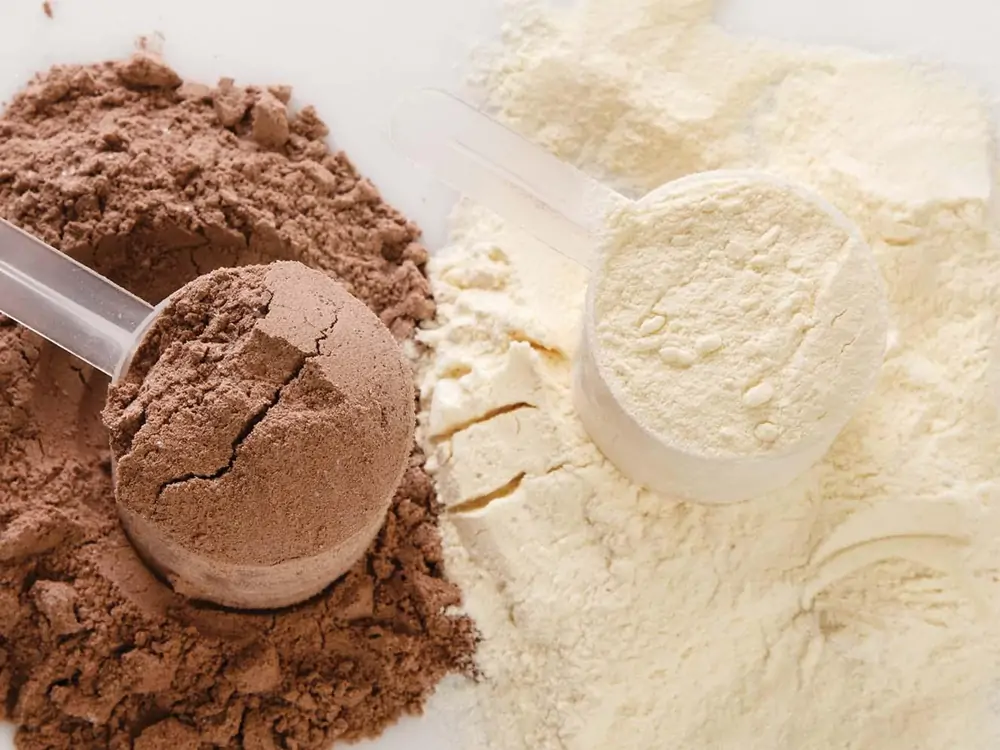
Powdered supplements are dietary supplements available in powdered form. Some comprise a single ingredient or nutrient. Meanwhile, others have a blend of vitamins, superfoods, and proteins.
Such supplement products are typically formulated to be mixed with water or milk and then consumed. Here, we look at their key attributes:
Taste
- They can have an unpleasant taste on their own. That ranges from being earthy, bitter, fishy, or sour.
- Manufacturers typically add sweeteners, flavors, and bitter blockers to mask their taste. This further makes such products more palatable.
- Consumers often find that blending them into flavored drinks or smoothies enhances their palatability.
Absorption speed
- They commonly provide faster absorption than capsules and tablets.
- That’s because they don’t possess a protective casing. As a result, the nutrients are already in a dispersed form. The body can promptly begin nutrient absorption.
- It means powders typically offer better bioavailability than pill formats. As a result, you acquire more nutritional value from the same dosage.
Stability
- The ingredients in such products may be more prone to degradation. That’s due to moisture, light, or air exposure, which impacts their stability with time.
- Powders entail careful storage to avert moisture exposure and clumping. They may degrade more speedily once opened.
- Hence, they can be less appropriate for travel.
Production cost
- Powders typically incur greater production expenses than other formats.
- That may be due to the need for a robust flavor system.
- A high quantity of active ingredients requires a robust flavor system. That’s to mask their taste.
Capsules

Capsules are a format of dietary supplements that provide precise doses of nutrients. These can be vitamins, herbs, minerals, probiotics, amino acids, or more. They are enclosed in a gelatin or plant-based (vegetarian) shell.
It safeguards the ingredients from degradation. Capsules allow for easy swallowing. They are favored by individuals seeking a reliable and quick supplement form. With that, let’s compare their essential attributes:
Taste
- Capsules have minimal odor or taste since the active ingredients are encapsulated.
- It helps mask the unpleasant taste of several raw supplement ingredients.
- Thus, many people can swallow capsules conveniently without experiencing any bitterness or aftertaste.
Absorption speed
- Capsules generally dissolve more swiftly than compressed tablets. That lets their contents be released for faster absorption.
- However, your digestive system must first break down the capsule’s outer shell. It occurs before the active ingredients are released, leading to their absorption. That process is still slower compared to powders.
- In some instances, capsules offer better bioavailability than tablets, although this is not always the case.
Stability
- Capsules typically have a longer shelf life and stability than powders. Yet they are inferior to tablets in this aspect.
- The capsule shell safeguards the active ingredients from moisture, oxygen, and light. That protection prolongs the supplement’s shelf life and maintains potency.
- However, some capsule shells are more susceptible to temperature and humidity fluctuations. It includes gelatin and a few vegetarian capsule shells. They may deform, soften, or stick together if storage conditions are bad.
Production cost
- Capsules have comparatively lower production costs than powders but higher than tablets.
- That’s because capsules don’t require a flavor system. It’s also because they have limited space, which makes costs easier to manage.
- Yet, their production expenses may go higher as they require filling and encapsulation steps.
Tablets

Tablets are a prevalent format for health supplements. They are produced by compressing powdered active substances with binders, fillers, and excipients.
For consumers’ convenience, they come in varied shapes and sizes. They offer practicability in precise dosages and ingestion. Let’s examine their key attributes:
Taste
- Tablets typically don’t taste very good. After taking one, you may have a bitter aftertaste in your mouth.
- The longer a tablet sits on your tongue, the worse the taste becomes. It’s mainly in the instance of difficulty swallowing before you get it down.
- Coatings can effectively mask their bitter taste. Meanwhile, uncoated variants of tablets can have a lingering aftertaste and a gritty texture.
Absorption speed
- Compared with other formats, they typically have a slower absorption rate and lower bioavailability.
- They involve a breakdown of the digestive system, which may delay absorption.
Stability
- As compared to other formats, tablets are the most robust and stable. They have the longest shelf life.
- That makes them most suited for challenging climates.
Production cost
- The production costs of tablets vary and depend on several factors. These include the quantity of active raw materials and whether a coating or flavor system is used.
- They entail a simpler flavor system than powders, thereby reducing costs.
- They are generally cost-effective and ideal for mass production and high-volume products.
How to choose dietary supplements according to your needs?
When selecting the right nutritional supplement that’s contingent upon your requirements, there’s no one-size-fits-all answer. Instead, the choice of supplementation depends on several perspectives, including your lifestyle and preferences. In this regard, here are some noteworthy considerations:
1. Understand and evaluate your personal needs
Begin by evaluating your individual health objectives. Your goal is to identify what nutrients or compounds you should focus on more. For instance, if you intend to maintain overall wellness, a quality multivitamin may be sufficient.
It’s also important to understand whether you have any known nutritional deficiencies. In that case, supplements can help fill the gap.
2. Figure out the supplementation format
There are various supplementation formats, as previously discussed. The format you select relies on your lifestyle, personal preference, and the type of supplement you take.
For example, powdered supplements can be the right choice. That’s in case swallowing pills is troubling for you. Moreover, a pill supplement is ideal if you’re always on the go. Likewise, powders such as creatine and protein powders are favored among fitness devotees and athletes.
3. Emphasize purity and quality
When selecting supplements, always emphasize products that are transparent about sourcing and ingredients.
Figure out products that have been tested by a third-party. It implies that the product has been separately verified for purity, safety, and potency.
Analyze the ingredient list to confirm the supplement doesn’t comprise allergens or artificial additives. Additionally, research reputable supplement brands, their products, reviews, and certifications.
4. Adapt your supplements to your lifestyle
When opting for supplements, consider how they fit into your daily routine and lifestyle. For instance, some supplements are taken at specified times of the day. Meanwhile, others are taken after exercise or with food.
For example, post-workout supplements like creatine are typically consumed after exercising. It aids in muscle recovery and repair.
5. Consult a healthcare provider
It’s always a good idea to consult your healthcare provider before taking any supplement. They can help you determine what supplement is ideal for you. They can further guide you on the proper dosage.
Blood tests can be used to identify deficiencies. It’s also done via monitoring interactions between medications and supplements.
Conclusion
Opting for the correct dosage format begins with understanding how each choice compares with the others. That’s contingent on factors such as manufacturability, function, and user experience. Each format has its pros and cons.
As a brand, selecting the right format hinges on understanding the target market. As a consumer, choosing the ideal nutritional supplement is all about identifying your health requirements.
With a wise approach, such products can significantly enhance your overall well-being.